
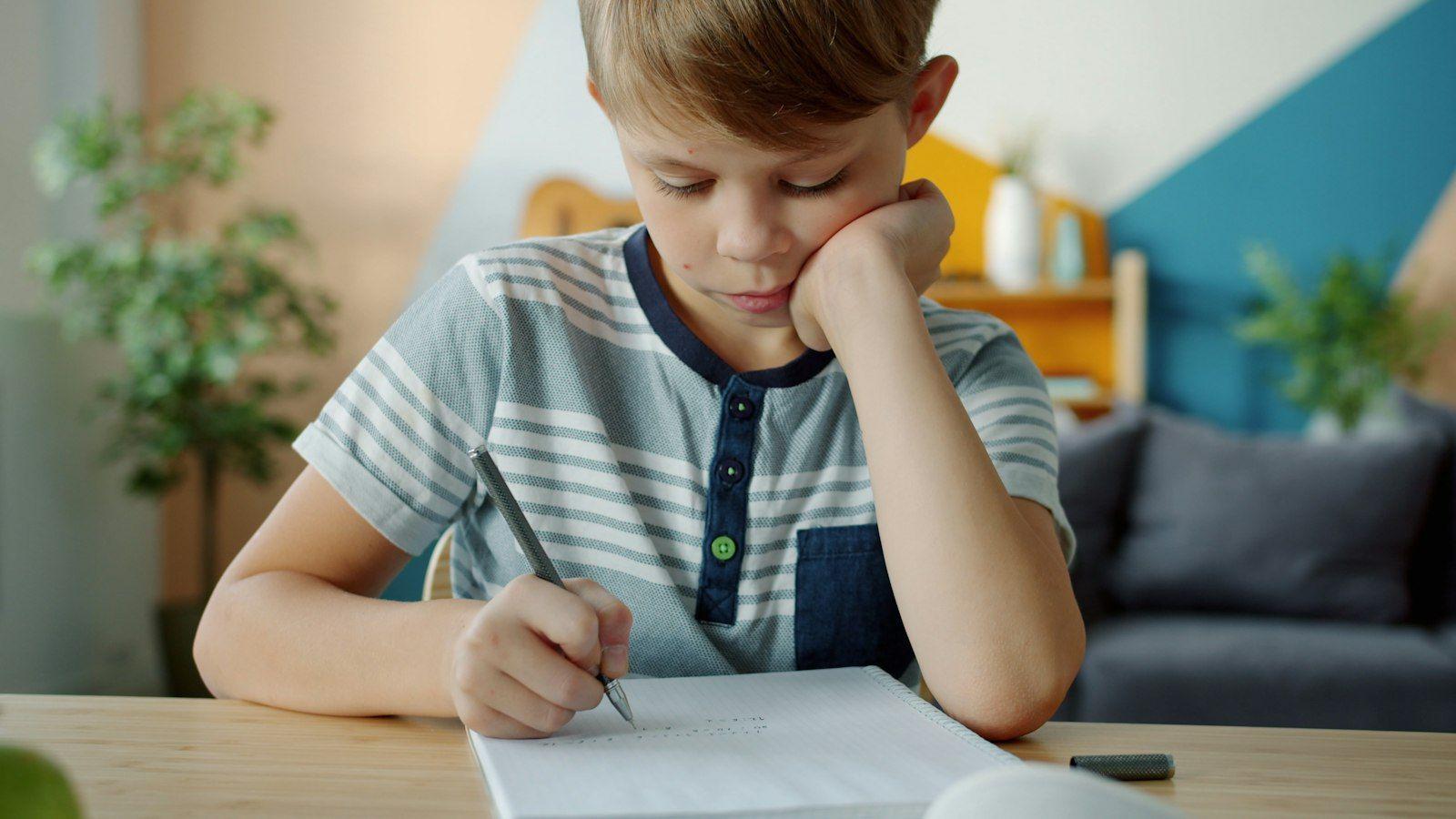
You ask how school was. "Fine." You ask about the math test. "It was okay." Then they head to their room, and the conversation is over before it started.
Most children don't announce that they're struggling in school. Some don't want to let you down. Others can't put it into words yet; they just know a certain class makes their stomach drop. So the signs come out sideways, and it's usually a parent who notices first.
Here's what to watch for, and what you can do if you see it.
5 quiet signs your child is struggling in school
1. "Fine" has become the only answer
A one-word reply now and then is normal, especially with teenagers. Watch for a change instead: a child who used to talk about their day now goes quiet or changes the subject whenever one particular class comes up.
2. Twenty-minute homework is taking all evening
Every child has hard nights. But when the same kind of assignment keeps stretching to an hour, or keeps ending in tears, it often points to a skill from an earlier grade that never fully settled. Today's lesson is built on top of it, so everything feels shaky.
3. Their confidence drops before their grades do
Report cards arrive late. A drop in confidence shows up much earlier, in small sentences like "I'm just bad at math" or "I'll never get this." Take those seriously. A child who has decided they can't do something stops trying long before the marks catch up.
4. A subject they loved is suddenly "boring"
The child who read past bedtime now won't open a book. The one who liked numbers now groans at every worksheet. "Boring" is often a safer word than "lost."
5. They can't start without you beside them
If homework only happens when you're sitting next to them, they may not trust their own understanding yet. That isn't laziness. It's a confidence gap, and confidence gaps can close.
What you can do this week
- Change the question. "What was the hardest part today?" opens more doors than "Did you finish?"
- Watch one page of homework. Don't jump in. Just notice where the pencil stops.
- Message the teacher. Ask two things: where your child is doing well, and where they need support.
- Praise the effort you actually saw. "You stayed with that problem for ten minutes" means more than "Good job."
When one-to-one tutoring makes sense
If a few of these signs have stayed for more than a couple of weeks, it may be time for help beyond the kitchen table. That isn't because you've done something wrong. A classroom of twenty-five simply can't stop for one child's question.
One-to-one tutoring works differently. There's no audience to feel embarrassed in front of and no rush to keep up with the group. The teacher can go back to the exact step where things slipped, try a second explanation, then a third, and let your child feel what it's like to get it right again.
How Alloria works with families
Alloria Learning Center teaches one-to-one and fully online, so your child learns from home, whether your family lives in the U.S. or in Nepal. Our teachers speak both Nepali and English, so you can talk with them about your child's progress in whichever language feels easier. Lessons follow your child's schoolwork and the goals you set, and our teachers pay attention to how your child is feeling as well as how they're scoring.
Noticing the signs your child is struggling in school is the hardest part, and you've already started. The next step can be small.
Not sure yet whether your child needs help? That's what the demo class is for. It's always free: your child meets a teacher online and works through a few problems, and you see how they respond, with no pressure to sign up. Book a free demo class or call +1 (720) 243-6452.