
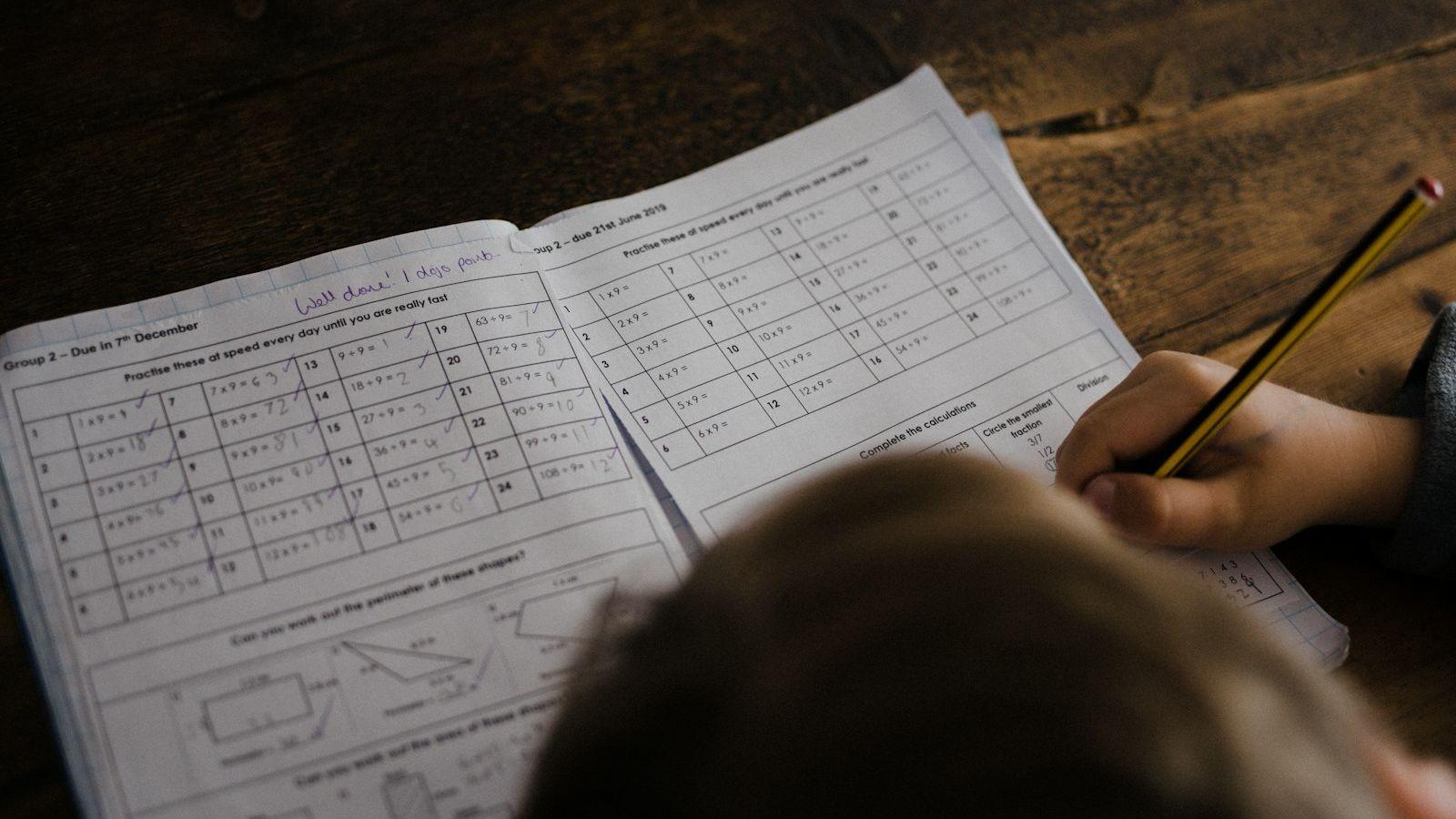
It's late, the worksheet is half empty, and your child's eyes are wet. You want to make it better, so you say what feels kind: "Don't worry. I was never good at math either."
It comes from love. But children listen closely, and what many of them hear is something else: this runs in the family, so there's no point trying.
Math confidence in kids is built, and broken, in small moments like this one. The good news is that a few changed words can start to rebuild it.
Why a kind sentence can backfire
Children build their picture of themselves from what adults say in passing. When they hear about "math people" and "non-math people," they quietly pick a side, often before they've really tried. Once a child decides they're on the wrong side, every hard problem becomes proof.
Ability in math grows with practice, encouragement and small wins. The words around the homework table can either keep that door open or close it.
What to say instead
| Instead of | Try saying |
|---|---|
| "I was never good at math either." | "This is tricky. Let's figure it out together." |
| "You're so smart!" | "I saw how hard you worked on that." |
| "Why can't you get this?" | "Show me where it started to feel confusing." |
| "It's easy, just do it like this." | "What have you tried so far?" |
| "Don't worry about it." | "It's okay to feel stuck. That means you're learning." |
Notice the pattern. The new phrases praise effort, invite your child to explain, and treat being stuck as a normal part of learning, not a verdict.
Four habits that build math confidence
- Celebrate effort and progress. "You didn't give up on that one" deserves as much praise as a correct answer.
- Make your own mistakes visible. When you miscount the change at a shop, say so and show how you fix it.
- Start with a small win. Begin a session with a problem your child can solve, then raise the difficulty slowly.
- Bring math into the day. Shopping totals, recipe amounts, travel times and cricket or basketball scores all count.
When the confidence is already gone
Some children have been telling themselves "I'm bad at math" for years. One good evening won't undo that. What helps is a place where trying feels safe: no classmates watching, no race to keep up, and an adult who goes back to the exact step where things first slipped.
That's what one-to-one teaching does well. The teacher can explain the same idea three different ways until one clicks, and let your child feel success again.
How Alloria helps
At Alloria, every class is one-to-one and online, so your child has a teacher's full attention from home. Our teachers speak both Nepali and English, which helps when a concept needs explaining a different way. They care about how your child feels about math, not only about the score. Confidence usually comes first, and the marks follow.
Rebuilding math confidence in kids starts with the words they hear at home, and a patient teacher can take it from there.
Curious how your child responds to a patient teacher? Try a free demo class online. Book a free demo class or call +1 (720) 243-6452.